
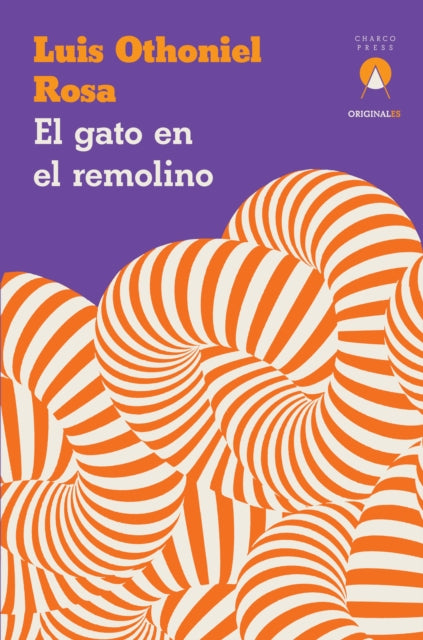
El gato en el remolino - Luis Othoniel Rosa
Luis Othoniel Rosa
Una novela experimental y ut�pica que narra el nacimiento, la vida y la muerte de una conciencia colectiva. "Lo que quiero decir es que la locura es un derecho". As� comienza�El Gato en el remolino , una novela experimental y ut�pica que relata la historia del surgimiento, desarrollo y extinci�n de una conciencia colectiva conocida como�el Animal. El libro cuenta la historia de un mundo que resulta a la vez deseable y aterrador a lo largo de los pr�ximos 377 a�os. Comienza en medio del relato. En el Caribe. Avanza lentamente, siguiendo con rigor la forma de un espiral narrativo a trav�s de ciclos de destrucci�n. Luego regresa a nuestro presente, para que podamos contemplar c�mo nuestro mundo se transforma en aquel otro. Su protagonista es una conciencia colectiva: el Animal.�Nace. Crece y aprende. Muere. Es llorado por diosas cibern�ticas. Tambi�n grita: �La soledad es una enfermedad colectiva! �Defendamos nuestro derecho a la locura! �Valientes no son quienes resisten, sino quienes se atreven a soltar!The post-colonial birth, life, and death of the collective consciousness known as the Animal. Middle-aged streamer twins in Bayam�n, Puerto Rico, are the first human beings to successfully connect-sharing their consciousness across 34 translucent cables. In that moment, the Animal is born, an intracerebral force that quickly grows to encompass anthills of synaptically entwined bodies, a floating library kitchen redolent of rice and beans far above the Mississippi river, and a transhuman compound in a future Cuba on the Isle of Youth.�Circling back and forth and ever progressing, Animal Spiral moves through 400 years of human, and then post-human history, beginning with a revolution on the streets of San Juan and ending with five brilliant siblings: the Squash (humanoid), Calima (beetles), Yemay� (eels), Coatlicue (serpents), and Jurac�n (anthropomorphic birds), who have millions of bodies and all the world's intelligence, but only want to no longer be alone. This is a buoyant, joyous ode to possibility, a warning about the dangers of neglecting what makes us human, and an astonishing exercise of the flexibility and capacity of liminal spaces. Loneliness is a collective disease! We defend our right to madness!�Brave are not the ones who resist; brave are the ones who let go!